


In the 1950s 15-20 NATO divisions faced 60-80 Warsaw pact divisions with an additional 170 divisions located in the USSR. The US Army Special Forces was developed as one of the responses to the overwhelming forces facing the NATO troops in Western Europe. The US Army Special Force Soldiers and their Guerrilla troops would slow the USSR assault on Western Europe, allowing time for reinforcements to arrive.
On 19 May 1952, the Third Army activated the 10th SFG(A) at Ft Bragg, NC, under the US Army Psychological Warfare Center, with an authorized strength of 122 officers and men. 20 June 1952, there was 7 soldiers assigned to 10th SFG(A). By Aug 1953, the unit was full strength, with an additional 123 "operational unit"- volunteer personnel.
10th SFG(A)
Commander: COL Aaron Bank
XO: LTC Jack Shannon
S-1: 1LT Carl Bergstrom
S-2: MAJ George Gormlie
S-3: MAJ Art Suchier
S-4: MAJ Raymond Doucette

From New York City, CPT Bank served with the OSS in Europe and Asia. In 1952 COL Banks became the Chief of the Special Operations Branch of the Army’s Office of Psychological Warfare, where he was involved in developing the US Army Special Forces. COL Bank was commander of 10th SFG(A), when the unit was activated 19 June 1952.

In early 1944, LT Shannon was recruited into the Office of Strategic Services (OSS) as part of the Jedburgh project. LT Shannon jumped into France on 27 June 1944 as part of the Inter-Allied Mission BERGAMOTTE (Jedburgh). CPT Shannon served in Burma with Detachment 101. LTC Shannon was the XO for 10th SFG(A), when the unit was activated in 1952. LTC Shannon was first Commander of 77th SFG(A), in 1953.

LTC Carl Bergstrom
CPT Bergstrom was S-1 for the 10th SFG(A) in Ft Bragg and later in Bad Tolz Germany. MAJ Bergstrom would return to Ft Bragg and serve with 77th SFG(A) in 1959.

LTC George Gormlie
From San Diego, Ca, MAJ Gormlie served with the Americal Division in the PTO. MAJ Gormlie served with 187th RCT in the Korean war, where he worked with the XO LTC Aaron Bank. LTC Gormlie was the S-2 for the 10th SFG(A) at Ft Bragg. LTC Gormlie would be S-2 at Bad Tolz and later served as XO.

LTC Oscar "Art" Suchier
From Detroit, Michigan, LT Oscar "Art" Suchier served with F Co, 5th Ranger BN in WW2. MAJ Suchier was serving with the 82nd ABN when he volunteered for Special Forces.

COL Raymond Doucett
Major Doucett was the S-4 for 10th SFG(A) in North Carolina and Germany. Later as an Active-Duty Adviser, LTC Doucett helped establish the USAR Special Forces units in New Jersey (303rd SFOD FC) and New Mexico (307th SFOD FC).
COL Aaron Bank
LTC Jack Shannon
10th SFG(A)-Building the Special Forces Soldier
COL Bank, recognized CPT Brucker's wealth of Special Operation experience in WW2, and actively recruited CPT Herb Bruckner, who was serving in the 82nd ABN at Ft Bragg. CPT Brucker had worked for MAJ Bank with the OSS in China and Counterintelligence Corps Detachment (CIC) in Germany after WW2.
COL Bank tasked CPT Brucker and his team to develop the training for the unit, derived from their OSS and Guerrilla Warfare WW2 experiences in Europe and Asia.
The training focused on individual skills; weapons, commo, demolitions, medical subjects, survival skills, operations and intelligence, and clandestine activites.
The first 2 Special Forces qualification classes were 8 weeks longs.
10 Nov 1952 - 17 Jan 1953, 1-53
2 Feb 1953 - 31 Mar 1953, 2-53

Unarmed Combat, Ft Bragg

PFC Johnny Dolin, Mountaineering training


Weapons Training, Ft Bragg, NC
Major Herb Brucker
Technician Four (T/4) Brucker voluntered for the OSS and trained as a radio operator. T/4 Brucker attended the British Special Operation Executive Training (SOE). Prior to deploying with Jedburgh team Hermit in France in 1944, T/4 Brucker was promoted to 2nd. Later in the war, LT Brucker served in Asia with the OSS Det 202 in China.

CSM Johnny Dolin
PVT Johnny Dolin was one of the early volunteers for Special Forces. PFC Dolin served with 10th SFG(A) and 77th SFG(A) as a medic.
10th SFG(A)-Building the Teams
In the Spring of 1953, after completion of the individual training phase, the students were sent out as FA teams to Camp MacKall on FTX FREE LEGION and FTX LEGIONAIRE RALLY. Here the Special Forces students applied their individual skills and the team's collective skills; organizing a guerrilla forces while operating in a hostile envirnoment in the country of Erewhon (Nowhere spelled backwards).

Guerrilla Chief CPT Herb Brucker

MAJ Suchier giving the Operation Order to students
US Army Special Forces Pay-1952
In 1952, the pay for a Special Forces NCO SGT/E-5 was $161.70 month, with an additional $55 for Jump Pay*. Special Forces Officer Captain/O-3 pay was $342 a month, with an additional $110 for Jump Pay*.
In the US in 1952 the average wage per month was $192 with annual pay around $2300. The cost of a house was $9000-10,022 with a monthly house payment of $60. A brand new car was $1629, with payment of $45-65 a month over 2-3 year period.
* The difference in jump pay between enlisted and officers ended in 1987, with all ranks receiving $110 a month.
10th SFG(A) Gallery-Ft Bragg, NC

10th SFG(A) Detachment equipment display

SSG Vahan Sipantzi

10th SFG(A) ABN OPs

10th SFG(A) Headquarter sign, Ft Bragg

CPL Foster McFarland

Bill Donavan reviewing the 10th SFG(A)

10th SFG(A) ABN OPs
10th SFG(A) Gallery 8240th AU Korea
To support Special Operations in Korea, the Far East Command (FEC) requested fifty-five officers and nine enlisted men from the 10th SFG(A) to be levied in early 1953. Ultimately, 99 Special Forces volunteers, 77 officers and 22 enlisted men, were sent from Fort Bragg between February and September, 1953 were sent to the 8240th Army Unit.
The mission of the 8240th AU was 2 parts; first, to develop and direct partisan warfare behind enemy lines and within Allied lines and secondly to supply partisan groups and agents operating behind enemy lines by means of water and air transportation.
After a short period of training the 10th SFG(A) troops went out to their assignments, not as teams, but as individuals or 2-3 man teams assigned to the units working within the 8240th.
During Guerrilla operations with the 8240th AU in Korea, the first 2 US Army Special Forces soldiers killed in action were, 2LTJoesph Castro and 1LT Douglas Payne.


7th ID TLO team, top to bottom: SFC Blademar Navejar, CPL Russell Shafer, MSG John Kessling and CPT Charles Bushong
(L-R) 10th SFG (A) troops and UN counterparts assigned to 8240th AU, April 1954. 1LT Brain Passey, 1LT Murl Tullis, 1LT Rueben Mooradian, CPT Bliss Croft. 1LT Charlie Norton (in Aussy slough hat), CPT John Sullivan (AUS Army), LT Johnson (AUS Army), Mike Layton and LT George (Brit Army).


1LT Murl Tullis (L) and Myron "Mike" J. Layton (R) and , assigned to 6th Partisan Infantry Regiment,
April 1953
10th SFG(A) Officers assigned to the 8007th Army Unit at Camp Drake, Japan. From left to right, 1LT Sam C. Sarkesian, 1LT Warren E. Parker, CPT Francis W. Dawson, 2LT Earl L. Thieme and 1LT Leo F. Siefert.

1LT Douglas W Payne
Douglas Payne, was from Hastings Michigan. PVT Payne served in the US Army during the occupation of the Philippines and Japan. LT Payne was recalled to service in 1951 and Special Forces qualified in 1953. LT Payne was assigned to the 8240th AU in Korea and killed on 21 July 1953, just days before the war ended.
2LT Joseph M Castro

From Garrett Texas, LT Castro was recalled to service in 1951. LT Castor volunteered for Special Forces and graduated the qualification course in 1953. LT Castor was assigned to the 8240th AU and killed on 17 May 1953.

SGT Layton served with 82nd ABN during WW2. LT Layton graduated the second Special Forces Qualification Course at Ft Bragg in 1953. After graduation, LT Layton was sent to the Korean. LT Layton served with 8240th Army Unit, 6th PIR during the Korean War. CPT Layton was DET 2 Commander, USAR 301st SFOD(FD), Tacoma, WA and later a Company Commander in USAR 17th SFG(A). Mike Layton was a lauded newspaper journalist and author.
MAJ Myron "Mike" Layton

Not yet 18, he entered the US Navy in 1943. Seaman Tullis was stationed at Pearl Harbor, the Midway Islands and aboard the USS Baltimore when it went to Nagasaki, Japan. Upon his discharge as a Machinist’s Mate 2nd Class in 1946. LT Tullis volunteered for Special Forces at Fort Bragg in 1952. LT Tullis was assigned to United Nations Partisan Forces (Korea) 8240 Army Unit. CPT Tullis later served with Special Forces at Fort Bragg with the 77th SFG(A) and, 10th SFG(A) in Bad Toltz.
LTC Murl F Tullis

John Kessling joined the Merchant Marine in 1944 at the age of 16. After WW2, Kessling enlisted in the U.S. Army in August 1946, was assigned to 504th PIR. MSG Kessling applied for and was accepted into Special Forces training in October 1952. Assigned to the 18th Special Forces Operations Detachment, District B of the 10th SFG (A). MSG Kessling SF qualificationon 25 February 1953. MSG Kessling was one of 22 enlisted men assigned to the 8240th Army Unit, 6th Partisan Infantry Regiment (PIR), Tactical Liaison Office (TLO) located with 7th Infantry Division (ID), 40th ID and 2nd IDs and the Ethiopian Regiment.
CSM John E Kessling
10th SFG(A)-FTX CLEO
FTX CLEO was a Group-level exercise conducted in Georgia’s Chattahoochee National Forest, from July through September 1953, to evaluate the training and readiness of the 10th SFG(A). COL Bank tasked MAJ William Ewald, Commander of 13th SFOD, with conducting the evaluation. Troops from the 10th SFG(A), the Army Field Forces personnel, and locals supported the exercise.
MAJ Ewald and his team established a base camp area, Camp Castro, near Margaret Georgia, to serve as the maneuver control element headquarters in Georgia’s Chattahoochee National Forest. During the FTX, MAJ Edson Mattice also served as Commander of the 13th SFOD.
FTX CLEO, the first Group-level exercise, closed at the end of Sep, proved the 10th SFG(A) was mission ready.
During the FTX, a pair of tragic events occured. On 4 Aug 1953,
PFC Donald Sevits Jr, was injured in motocycle accident, unexpectedly he died several weeks later. On 19 Sep 1953, a 3/4 ton truck over-turned on a sharp turn, several soldiers were injured, PFC Dennis L Bailey, CPL Ian D.W. Sutherland and, MSG Lawrence Alligood. Tragically 2 soldiers were killed, MSG John Meyers, from Youngstown Ohio and MSG James D Gilland Reidsville, NC

Camp Castro in the Chattahoochee National Forest of Georgia was named in honor of 2LT Joseph M. Castro, a former 10th SFG soldier killed in action in Korea. MAJ William Ewald established the 10th SFG headquarters here during FTX CLEO, to evaluate the Group’s ability to perform its operational mission.


10th SFG(A) troops jumps into Northern Georgia as part of Exercise CLEO
Alanta Journal, 13 Sep 1953
13th SFOD Operations Center for FTX Cleo in Camp Castro
LTC William Ewald

Born in Kassel, Germany. William Ewald's family emigrated to the US in 1928. SGT Ewald served with the NJ National Guard. During WW2 LT Ewald served with the 9th ID from North Africa, to Italy, to Normandy and Central Europe. MAJ Ewald would serve in 10th SFG(A) and then 77th SFG(A). LTC Ewald would take a Mobile Training Team (MTT) from 77th SFG(A) to establish the ARVN Ranger program in 1960.

From Boston, MA LT Mattice served with the 504th PIR, 82nd ABN, in Italy, Holland and Belgium, during the battle of the Bulge, and the final days of Germany. LTC Mattice was Aaron Bank's XO for 10th SFG(A) in Bad Tolz
LTC Ian D.W. Sutherland

From Jefferson City, TN , CPL Sutherland served with 10th SFG(A) as a medic and later with 77th SFG(A). LTC Sutherland served 3 tours in Vietnam with 5th SFG(A), MACV-CSD-PRU and MACVSOG. After retirement, Ian D.W. Sutherland wrote the book "1952-1982, Special Forces in the US Army".
LTC Edson Mattice
10th SFG(A) Exercise Tenderfoot
CPT Herb Brucker, LT Johnny Raymond and LT Caesar J. Civitella were involved in the development of the training for the Escape and Evasion (E&E) exercise called exerciseTENDERFOOT, that was for US Navy and USMC pilots. This training was based on the survival training that the 10th SFG(A) soldiers recieved. TENDERFOOT I was conducted in 1953, where the pilots, who instead of getting in their aircraft the ‘ready alert’ pilots were taken directly to a waiting transport plane and flown to Camp Mackall. The course started with the pilots given classes in survival skill training, including; map reading, firemaking, catching and cooking game. The survival skills training was followed by an exercise with the class being split up into 2-man teams and then made to evade and survive in a simulated enemy country. Upon capture, they were placed in a POW camp and subjected to interogations, sleep deprivation and hard physical labor.
MAJ Caesar J. Civitella
LTC Johnny Raymond


Ceasar Civitella joined the U.S. Army in February 1943 and volunteered for the OSS Operational Groups (OG). SGT Civitella served with Company A of the 2671st Special Reconnaissance Battalion, (Separate) (Provincial) in Europe until end of WW2. After returning to the Army and receiving a commision, LT Citivella served as one the first Special Forces instructors at the Psychological Warfare center. LT Citivella joined the 77th SFG(A) in Aug 1953.
Johnny Raymond from Breaux Bridges, LA served with the US Navy in the Pacific, during WW2. LT Raymond served in the Korean War with the US Army 5th Regimental Combat Team, where he served as a platoon leader and a company commander. CPT Raymond joined the 10th SFG(A) in 1953. CPT Raymond would stay at Ft Bragg with the 77th SFG(A), when the 10th SFG(A) went to Germany.

Evening Eagle 19 Sep 1955

USN and USMC Pilot Students in TENDERFOOT
10th SFG(A) Documents


10th SFG(A) Activation orders, 19 May 1952
SFC Edward Montgomery's 10th SFG(A) SF Medic class
completion certificate

CPL Edward Montgomery served with the 508th PIR 82nd ABN during WW2 as a Medic. CPL Montgomery jumped into both Normandy and Holland. SFC Montgomery graduated in the 1st Special Forces class at Ft Bragg. CSM Montgomery was one of the original Special Forces Medics.
CSM Edward Montgomery


At the end of WW2 a number of Insurgencies were still raging across USSR-occupied Eastern Europe.
-
Mirdita Tribesmen under Gjon Markagjoni in Albania.
-
The "Forest Brothers" in the Balkans
-
The "Haiducii", a Romanian anti-communist resistance movement
-
The Polish "cursed soldiers"
-
The "Goryani" movement in Bulgaria
-
In Yugoslavia, the Chetniks and Croatian ultra-nationalist insurgents known as the "Crusaders"
In the early 1950s. the US Army Intelligence and the CIA estimated there was 200,000-500,000 Guerrillas and their supporters were still active in the USSR occupied areas.
The CIA funded a Georgetown university project, that produced a classified series of "Resistence Factors and Special Forces Areas" books in the mid 1950s, on the USSR- occupied countries, USSR and China.


Following the brutal crack-down to protests in occupied Eastern Germany in June 1953 and the increasing threat of a USSR invasion of Western Europe, the Joint Chief of Staff ordered the 10th Special Forces Group (Airborne) to deploy to Germany.
10th SFG(A) was transported by the USNS General A.W. Greely from Wilmington, NC to Bremerhaven Germany, on 10 Nov 1953. The unit would occupy Flint Kaserne in Bad Tölz and the Prinz Heinrich Kaserne in Lenggries, both located in the Bavarian region of Southern Germany.
10th SFG(A) Commander: COL Aaron Bank
10th SFG(A) XO: COL Edson Mattice
10th SFG(A) S-1: CPT Bergstrom
10th SFG(A) S-2: LTC George Gormlie
10th SFG(A) S-3: MAJ Art Suchier
10th SFG(A) S-4: MAJ Raymond Doucette
10th SFG(A) Gallery-Germany

In 1953, the 10th SFG(A) arrived in Bremerhaven, Germany, 21 November, and immediately departed by train for Bad Tölz, Germany. The site was the former training site for the SS candidate school during World War II. The 10th SFG(A) troops got to work removing much of the items from the previous owners and moving in the unit equipment.
Col Bank, directed his staff to quickly start the unit training cycle. MAJ Suchier, CPT Brucker and team identified training areas and developed training plans for the unit.
On 1 December 1954, Col. Aaron Bank, was transferred to the office of G-3, Seventh Army, and on 21 December 1954, Col William E. Ekman, assumed command of the Group.

10th SFG(A) Soldiers lead their Guerrillas on a Direct Action mission, during an exercise.
10th SFG(A) FA Detachment, equipment layout


10th SFG(A) Soldiers receiving cultural training, to blend in with the European Populace
10th SFG(A) Soldiers receiving cultural training, to blend in with the European Populace


CPT Herb Brucker's FA, L-R CPT Brucker, MSG Anthony Kuselka, MSG Myron "Mumbles" Johnson, SFC Clyde "Doc" Knox and SFC Robert Sted
10th SFG(A) Soldiers on an Guerrila Warfare Exercise in Germany

B GEN William Ekman
From St Louis, MO, LT Ekman was a West Point graduate, class 1938. LTC Ekman Led the 505th PIR in Normandy , Holland and the Battle of Bulge. On 15 December 1954, COL Ekman assumed leadership of the 10th SFG(A) in Bad Toelz, Germany; commanding the organization until July 1956,
10th SFG(A) Field Exercise 54-1, 1954
Early in 1954 training began and in the spring of the year all operational teams participated in Field Exercise 54-1.
10th SFG(A) Field Exercise 55-1, 1955
In 1955, the 10th SFG(A) operational teams participated in the second and third cycles of Field Exercise 54-2.
10th SFG(A) Reduction in Forces (RIF), Jan 1956
Following the end of the Korean War, President Dwight D. Eisenhower’s administration shifted toward a defense strategy called the "New Look." This policy favored strategic nuclear deterrence, guided missiles, and long-range aircraft over massive standing ground forces. The US Army faced 10% reduction in forces.
The 10th SFG(A) was reduced from 8 companies down to 2 companies, with many senior NCOs with combat experience transfered to other units. Only the direct intervention GEN Maxwell Taylor prevented the deactivation of 10th SFG(A).

10th SFG(A) Field Exercise 56-1, 23 April 1956
10th SFG(A) conducted field Exercise 56-1, starting 23 April 1956.
7781st Army Unit, 1 Sep 1956
The 7781st Army Unit was activated on 1 Sep 1956 with six modified ODAs, one Master Sergeant and five enlisted team members, under the Command of MAJ Edward Maltese and his XO CPT Barton. The 7781st was was embedded within HQ and HQ Co, 6th Infantry Regiment in Berlin. The mission of the 7781st was upon the outbreak of general hostilities, or under certain conditions of localized war, the teams were to cross from West Berlin into East Germany and attack targets designated by the U.S. Commander of Berlin and priority targets established in the U.S. European Command’s (USEUCOM) Unconventional Warfare Plan. Upon mission completion, teams were to conduct follow-on operations as directed by the Commander, Support Operations Task Force Europe (SOFTE).


From Northfield Vermont, LT Maltese served with the 505th PIR in the 82nd ABN. LT Maltese jumped into Normandy on June 6th 1944 and Holland in Sep 1944. CPT Maltese served with the 187th RCT in the Korean War. Major Maltese served with 10th SFG(A) in Bad Toelz, Germany; where he commanded the 7781st Army Unit.
COL Edward Maltese
Support Operations Task Forces Europe-SOTFE
Support Operations Task Force—Europe (SOTFE). SOTFE was established in Paris on 4 May 1955 to conduct planning and to provide operational control of all US special operations in the theater. HQ SOTFE was a classified joint military command, composed of US Army, US Air Force, US Navy, Allied Partners and CIA personnel, under the direction of the Joint Chiefs of Staff. It was tasked with peacetime planning for unconventional warfare, sabotage, and stay-behind operations in Europe during the Cold War. Their primary mission was to use its assets to delay and hamper a Soviet attack. In peacetime, SOTFE set up field exercises, unit evaluations, and coordinated training of the units with foreign SOF units.
In times of increased tensions or out right war, the SOTFE would relocate to their alternate location in Orleans France. 10th SFG(A) would deploy to Orleans and establish a SFOB.
Operation Muskateer, 29 Oct-6 Nov 1956
The Suez Crisis started on 29 October, with the primary objective of re-opening Egyptian waterways to Israeli vessels, quickly by United Kingdom and France forces joined the Israelis on 31 October, seeking to depose Egyptian president Gamal Abdel Nasser and regain control of the Suez Canal, which Nasser had nationalised earlier in the year. The attack was condemned by the USA and the USSR. Without US support and threat of USSR military retaliation, this forced a ceasefire on Nov 6 and the withdraw of the Israeli, French and British forces.
The 10th SFG(A) and U.S. Army Europe (USAREUR) was placed on operational alert, due to the threat of Soviet military intervention into the crisis.

British Paratroopers jump into Suez Canal

French Paratroopers jump into Suez Canal
Hungarian Revolution, 4-11 Nov 1956

The Hungarian Revolution began on 23 October 1956 in Budapest when university students appealed to the civil populace to join them at the Hungarian Parliament Building to protest the USSR's geopolitical domination of Hungary. A delegation of students entered the building of Magyar Radio to broadcast their sixteen demands for political and economic reforms to civil society. A group of police from the AVH (State Protection Authority) intervened and fatally shot several of the students. In response, Hungarians organized into revolutionary militias to fight the AVH; local Hungarian communist leaders and AVH policemen were captured and summarily executed, and political prisoners were released and armed. A new government was proclaimed under Imre Nagy, who quickly disbanded the AVH, declared Hungary's withdrawal from the Warsaw Pact, and pledged to reestablish free elections. On 4 November, USSR forces invaded Hungary to repress the Hungarian Revolution and fought the Hungarian revolutionaries until Soviet victory on 11 November. The Hungarian Uprising killed 2,500 Hungarians and 700 Soviet Army soldiers, and compelled 200,000 Hungarians to seek political refuge abroad.
The 10th SFG(A) was placed on operational alert alongside U.S. Army Europe (USAREUR). 10th SFG(A) troops went into isolation in preparation of a US intervention. Fearing a nuclear war, the Eisenhower adminstration chose to respond with psychological warfare, diplomacy, and granting asylum to refugees.
Hungarian Freedom Fighters

Stalin Monument destroyed in Budapest, 23 Oct 1956
German Training Assistance Group-GTAG
After 10 years after the end of WW2, it was crucial to rebuild the German Army. In early 1956, the 7th Army formed the German Training Assistance Group-GTAG. This hand-picked group of 403 men trained the reborn West German Army, the Bundeswehr. The GTAG trained the nucleus of the West German Army, from 1956-1957.
10th SFG(A) troops supported the GTAG mission.

10th SFG(A) German Training Assistance Group-GTAG

The 11th Airborne Div and 10th SFG(A) troops helped train the fledgling West German Airborne unit in 1956-1957.
10th SFG NCO with German Paratroopers 1957
10th SFG(A) Germany Exercise SABRE HAWK-1958
Conducted in February 1958 and involving more than 100,000 troops, it stood as the largest maneuver in the history of U.S. Army Europe (USAREUR) up to that point. The exercise served as the first comprehensive field test of the Army's new "Pentomic" structural reorganization.
The Middle East in Crisis, June-July 1958
In June 1958 a bloody military coup overthrew the Iraqi monarchy of pro-American King Faisal II, supported by the United Arab Republic-UAR of Egypt and Syria. In July a rumored military coup against the King Hussein regime of Jordan and a Communist threat to Lebanon, resulted in a British intervention in Jordan and the US sending the 1st Airborne Battle Group and 2 Battalions of US Marines, on Operation BLUE BAT to Lebanon.
The 10th SFG(A) was activated for these events, but wasn't deployed.
10th SFG(A) Operation ROBERT SEVEN-Congo, July 1960
After independence from Belgium was granted to Congo on 30 June 1960, the first week of July 1960, a mutiny broke out in the army and violence erupted between black and white civilians. Belgium sent troops to protect fleeing white citizens. The Katanga and South Kasai seceded from Congo. The 10th SFG was tasked by USAREUR to conduct a mission to evacuate US and other Western civilians from isolated parts of Congo. From 12-26 July 1960, three French-Speaking 10th SFG(A) Soldiers, Lt Sully Fontaine, CPT Albert Clement and SP5 Stefan Marzak and USAF SSGT Edward Cournoyer Radio operator, operating under a false Canadian Red Cross medical cover successfully evacuated over 290 civilians from remote areas in newly independent Republic of Congo.
COL Sully H de Fontaine
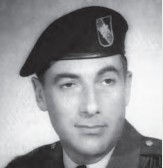
Born in Brussels Belgium. LT de Fontaine served with the British Special Operation Executive (SOE) in WW2. During the Korean War LT de Fontaine served with the Belgian forces. Sully de Fontaine emigrated to the US in 1952 and enlsied in the US Army Mar 1954. LT Fontaine volunteered for volunteered for Special Forces and served at 77th SFG(A) and 10th SFG(A) in Bad Tolz. CPT Fontaine served with 5th SFG(A) and MACVSOG. LTC Fontaine served with JCRC in Thailand.
MAJ Albert V "Jake" Clement

Born in Fall River, MA. Albert Clement enlisted in the US Army 1941. PFC Clement served with the 24th ID in the Pacific in WW2. LT Clement served with the 7th ID in the Korean War. In 1954 LT Clement volunteered for Special Forces, served in 77th SFG(A). CPT Clement served with 10th SFG(A) in Bad Tolz.
SFC Stefan Mazak

Born in Dolne Smi, Czechoslavakia. Stefen Mazak fought with the French resistence 1944-45. Entered US Army in 1954 as a Lodge Act soldier. PVT Mazak joined Special Forces in 1954 served in 77th SFG(A) and with 10th SFG(A) in Bad Tolz. SSG Mazak served with 7th SFG(A) in WHITE STAR. SFC Mazak was KIA 4 Apr 1968 serving with 5th SFG(A).
Click here USASOC Veritas article
10th SFG(A) Germany Exercise WINTERSHIELD I-1960
Exercise Winter Shield I, conducted in February 1960 was a massive joint military maneuver conducted by the U.S. Army and West German forces in Bavaria, near the Czechoslovakia frontier.
10th SFG(A) provided detachments to both the Blue and Red forces in the exercise.
10th SFG(A) Germany Exercise WINTERSHIELD II - 1961
Exercise Winter Shield II, conducted in February 1961 was a massive joint military maneuver conducted by the U.S. Army, West German and French forces.
10th SFG(A) provided detachments to both the Blue and Red forces in the exercise.
10th SFG(A) Germany - 1961
In Aug 1961, the 10th SFG(A) was reorganized with the additional of C Company. C Company would be oriented toward the Middle East with Major Charles M Simpson III as the Commander.
COL Charles M Simpson III
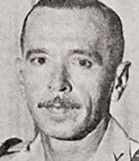
Born at Fort Monmouth, NJ Charles Simpson entered West Point in 1943. CPT Simpson was a Company Commander in the 7th ID during the Korean War. CPT Simpson volunteered for Special Forces and served at 10th SFG(A) in Bad Tolz, where he served a C Company Commander. LTC Simpson was deputy Commander of 5th SFG(A) in 1967 and was 1st SFG(A) Commander in 1971.
10th SFG Documents-Germany


10th SFG(A) Prop Blast Card
10th SFG(A) Jumpmaster Certificate
10th SFG(A) Documents-Germany


10th SFG(A) authorizing the wearing of the Green Beret
Courtesy of Dave Clark
10th SFG(A) Authorizing the Trojan Horse badge
Courtesy of Dave Clark

The Following people contributed to the 10th SFG(A) Section:
CW4 Dave Clark, 10th SFG(A)
COL Vahan Sipantzi, 10th SFG(A), 77th SFG(A), 1st SFG(A), 7th SFG(A) and, 17th SFG(A)
Henry "Hank" Frampton III, son of LTC Henry Fampton
Project Notes:
1 This is phase 1, of a 5-phase plan, that will cover from activation in 1952 to today.
a. Phase 1: Beginning until 54
b. Phase 2: 1954-1970
c. Phase 3: 1970-1980s
d. 1990s-2000:
e. GWOT-today
2. I am looking for the following from the 10th SFG(A):
a. Photos-preferably with story-dates
b. Stories-that need to be told/remembered
c. Documents
i. Orders, recruiting flyers / posters, unit rosters...etc.
ii. Yearbooks
d. FA / ODA Detachment numbers and location
i. Ft Bragg
ii. Germany
iii. Ft Devens, Mass
iv. Ft Carson, CO
v. MTTs/JCETs
vi. Operations