


15 April 1960, the entire SF establishment was formally brought under the Army’s new Combat Arms Regimental System (CARS). This paper scheme initially provided for a maximum of 24 SF Groups, initially all in the Active Component (AC).
The 5th SFG(A) was activated on 21 Sep 1961 at Ft Bragg.
The 5th SFG(A) was organized under TO&E 33-105D, dated 21 Mar 60. This new TO&E brought the Special Forces units in line with the US Army unit organizations and terminology.
5th SFG(A) and 7th SFG(A) would share the responsibility of training the volunteers for Special Forces at Ft Bragg
5th SFG(A) Commander: Colonel Leo H. Schweiter
A Co Commander:
B Co Commander:

From Wichita, Kansas CPT Leo H. Schweiter served with 101st ABN in Normandy, Holland and Bastogne. LTC Schweiter served with the 7th ID in the Korean War. COL Schweiter commanded the 5th SFG(A) in 1961. COL Schweiter served in the office of special assistant for counterinsurgency and special activities for the Joint Chiefs of Staff. Brigadier General Schweiter took command of the 173rd ABN in Vietnam in 1967.
MG Leo H. Schweiter
5th SFG(A) Ft Bragg, NC Activation-1961


5th SFG(A), Ft Bragg, NC

5th SFG(A) Activated
Raleigh News and Observer 23 Sep 1961
5th SFG(A) Ft Bragg, NC
5th SFG(A) Ft Bragg, NC-Documents


5th SFG(A) Activation Orders, Sept 1961
5th SFG(A) Reorganization Orders Oct 1962
5th SFG(A) Ft Bragg, NC Exercises-1962
In the early 1960s, the US Army went through some major changes. In April 1961, an entirely new concept called ROAD (Reorganization Objective Army Divisions) was introduced, replacing the short-lived Pentomic system that had been integrated in 1957 for the atomic battlefield. The ROAD system offered greater flexibility and improved compatibility with NATO allies. The first ROAD units were organized in February 1962 under draft TOEs, this reorganization was required to be completed across both the Regular Army and reserve components by the end of June 1964. Additionally, on January 18, 1962, President John F. Kennedy signed National Security Action Memorandum (NSAM) 124. This directive mandated that the U.S. military elevate counterinsurgency training, organization, and doctrine to a level equal with conventional warfare.
As the US Army units conducted exercises for these newly reorganized units, the Special Forces Groups at Ft Bragg supported the counter-insurgency component, by providing the guerrilla force and counter-insurgency advisers, for the Active-Duty and Reserve Component unit exercises. In 1962, the 5th SFG(A) supported a number of these exercises.
Exercise SENECA SPEAR: In April a 5th SFG(A) detachment organized, trained, and led 150 guerrillas against conventional forces at Fort Stewart, Ga. The guerrillas raided and sabotaged the forces from the 2nd Infantry Division and supporting National Guard units.
Exercise GUERRILLA ROAD: In May, a 5th SFG(A) detachment given 25 soldiers from the 5th Infantry Division (Mechanized) for the express purpose of transforming them into guerrillas. The team successfully trained and led their Guerrillas against the 2nd Brigade of the 5th Mech Division at Camp Drum, NY.
Exercise IRON DRAGOON: The 49th Infantry Division, Texas National Guard, mobilized for the Berlin Crisis, conducted counter-guerrilla operations during this exercise at Fort Polk, La. A 5th SFG(A) detachment organized and directed 65 guerrillas in UW activities.
Exercise SWIFT STRIKE II: Swift Strike II was a yearly joint exercise conducted in June by the Strategic Army Corps (STRAC), 82nd ABN, 101st ABN and 2nd ID, and the USAF to test rapid deployment and Combat readiness of the units. Guerrilla forces figured prominently in this huge exercise that stretched into both North and South Carolina. Two 5th SFG(A) detachments infiltrated by parachute and established guerrilla bases from which they organized and trained over 100 soldiers acting as indigenous personnel. The guerrillas made their weight felt as they continually hindered and delayed the conventional forces. The tactical situation closely resembled actual combat conditions. Teams from the 7th SFG(A) and the British 22nd SAS also participated in the exercise.
Exercise QUICK KILL: In the summer of 1962, 5th SFG(A) conducted an Unconventional Warfare exercise with a B-team and 4 A detachments from B Co, 5th SFG(A). These 5 detachments led over 150 guerrillas against the 504th PIR of the 82d Airborne Division, acting as the aggressor force.

Ledger Enquirer, 19 May 1962

The Times Picayune, 4 May 1962
5th SFG(A) Ft Bragg, NC Exercise DEVIL ARROW-1962
Exercise DEVIL ARROW conducted in August was the largest guerrilla—counterguerrilla exercise ever conducted in the United States and served as a training vehicle for approximately 2,000 Army troops. The maneuver area covered some 932 square miles of rugged mountains in western North Carolina. 5th SFG(A) played the major role in this exercise. ln addition to planning the exercise and operating the maneuver field control, 5th SFG(A), in conjunction with the British 22nd SAS Regiment, provided the guerrilla bands and leaders for the guerrilla organization. More men were committed to DEVIL ARROW (five and one-half "A” detachments) than in any other exercise in the 5th SFG(A)'s short history. Infiltrating the western North Carolina maneuver area by various means, four and one-half "A“ detachments acted as guerrillas while the final ”A" detachment entered as full-fledged unconventional warfare advisors and leaders. The Group's augmentation detachments provided advisers for both the guerrilla and the counterinsurgency force. Since the maneuver was an exercise that permitted the participants to contest freely for the allegiance of the local population, both sides relied heavily on the recommendations of the civil affairs, psychological warfare, and military intelligence advisors.
The 82nd Airborne Division and 18th Airborne Corps provided the aggressor force for the exercise.
The 22nd SAS deployed both A and D Sqaudrons to the US to participate in a number of Unconventional Warfare exercises with the US Army Special Forces, in the summer of 1962.

SSM Robert Walters
CPL Walters had recently passed selection for the SAS Regiment. His first deployment overseas was to the US in the summer of 1962, where he participated in several UW exercise including DEVIL ARROW. SSM Walters served with SAS Regiment from 1962 to 1986.

The Alva Review Courier, 4 Nov 1962

Special Warfare Magazine 1963

22nd SAS Regiment, Ft Bragg 1962
US Army Special Forces, Vietnam 1962


• February 8, Military Assistance Command, Vietnam (MACV) was established in Saigon with a Special Warfare Branch in the J-3 Staff Section (Operations).
• April 8, while conducting training with a local defense force, SGT Wayne Marchand and SP5 James Gabriel were killed by a VC attack.
• July 23, the US Army Special Forces takes control of the CIDG program from the Combined Studies Division (CSD).
• August, A-101, 1st SFG(A) opens Camp at Khe Sanh to monitor the Ho Chi Minh trail
• September 14-15, personnel from 5th SFG(A), arrived in Vietnam and founded the basis of US Army Special Forces (Provisional) Vietnam (USASF(P)V) in Nha Trang.
• Teams from 1st SFG(A), 5th SFG(A) and 7th SFG(A) were on 6-month TDY rotations to Vietnam to support the USASF(P)V for 29 detachments.
US Troops in Vietnam-1962
MAAG: 746 (Jan)
MACV: 3400 (Jun), 11,000 (Dec)
Special Forces: ~ 360 (TDY)
An Chua, Quang Nam Province, Vietnam- 8 April 1962

SGT Wayne E Marchand
SP5 James Gabriel
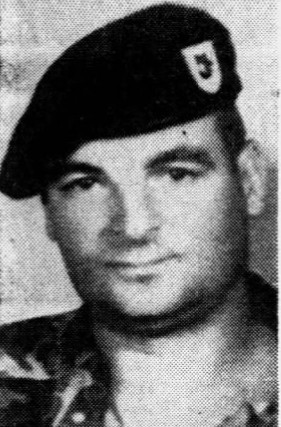
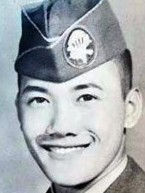
TDY with C Co 1st SFG(A), SGT Wayne E. Marchand and Spec 5 James Gabriel were training 31 local Vietnamese volunteers in a two-week field exercise in guard techniques and patrolling; outside An Chau, a village 6 miles east of Da Nang. Along to observe the training were Sergeants Francis Quinn and George E. Groom. All went well until the third night of the exercise. Suddenly, at 10 p.m., there was rustling in the saw grass across a nearby river. Concerned, Sergeant Gabriel fired warning shots, sent up flares in the direction of the noise. For a long time there was silence. Then came what sounded like a dog’s bark. From a different direction, a cock crowed. At last came the tap of a bamboo tocsin, a Vietnamese musical instrament, and the Viet Cong came running out of the dark. This first attack was quickly repulsed, but shortly after daybreak the guerrillas came back in force. Five Viet Cong guerrillas rushed the command post, were shot down, only to be followed by five more from another direction. “I saw Sergeant Gabriel phoning and shooting and changing clips all at the same time,” said a Vietnamese afterwards. “Three times he was wounded and knocked down. The third time he didn’t get up.” Before he fell, Gabriel radioed a final message: “Under heavy attack from all sides. Completely encircled by enemy. Ammunition expended. We are being overrun.” SGTs Quinn and Groom were captured and SGT Marchand and SP5 Gabriel, both wounded and unable to keep up, were executed by their VC captures.
SGTs Quinn and Groom were released 22 days later on 1 May 1962.
From Plattsmouth, Neb Wayne Marchard joined the US in 1952. 1953 PVT Marchand was assigned to 10th SFG(A) as a weapons Specialist at Ft Bragg. In 1954 PVT Marchard deployed to Bad Tolz Germany.
SGT Marchard was assigned to 1st SFG(A) on Okinawa in 1958. SGT Marchand was married with 2 children.
From Honolulu Hawaii. James Gabriel served with "A" Company, 307th Airborne Engineers, 82nd Airborne at Fort Bragg from 1959 to 1961. SPC Gabriel joined Special Forces in 1961 and was qualified as a Weapons Sgt. SP5 Gabriel was assigned to C Co 1st SFG(A) in Okinawa.
US Army Special Forces Vietnam Provisional Vietnam - USASF(P)V-1962
In February 1962, a Special Warfare Branch in the J-3 Staff Section was established in U.S. Military Assistance Command, Vietnam (USMACV). As 1962 progressed, Combined Studies Divsion (CSD) representatives in Washington, heartened by the success at Buon Enao, decided to extend the Civilian Irregular Defense Group (CIDG) program to other tribes and to the border as well. In June 1962, 16 new detachments were requested to man 8 newly proposed border camps. With the rapid growth of the program, the DOD felt that control of the CIDG program should pass to USMACV, but the CSD - MACV joint organization recommended the continuation of the existing arrangement. It was argued that under military control, the uniquely fluid structure of the CIDG program would become rigid and submerged in the growing military involvement. The DOD proposed to place the program under Special Forces control, with a full colonel in command, and on 23 July 1962, the decision to switch the program to Army control was made.
On 14 - 15 September, 72 personnel, from 5th SFG(A), arrived in Vietnam and founded the basis of a C- team and 4 A-teams; US Army Special Forces (Provisional) Vietnam (USASF(P)V) Headquarters was activated in Saigon. Colonel George Morton was designated as Commander of all USASF(P)V and all Special Forces personnel, permanent station and temporary duty (TDY), in Vietnam. In October 1962, a SFOB was establised in Nha Trang, supporting the operational 2 B teams and 24 A detachments.

Provisional Group HQs, Nha Trang 1962


From St Petersburg, FL CPT George Morton served with the 86th ID in Europe and the Philippines in WW2. MAJ Morton served as an adviser to the Royalist Greek against communist forces during the Civil war in 1946-1948. MAJ Morton served with 1st CAV in the Korean War.
5th SFG(A) Team photo
COL George Morton
5th SFG(A) Ft Bragg, NC Exercises-1963
Members of 5th SFG(A) played the roles of guerrillas and counterguerrillas in a number of major training exercises in the United States during 1963. This training prepared them for the present cold war counterinsurgency mission of Special Forces, as well as for the tentative hot war role of organizing, training, and assisting indigenous insurgent forces in enemy-held territory.
Exercises WATER MOCCASIN III and IV, members of the 5th SFG(A) participated as guerrillas to enable students of the Special Warfare School to perform their role as Special Forces "A” and "B" detachments, training guerrillas in an organized force.
Exercises HELPING HAND I and II. These were 5th SFG(A) planned and conducted training exercise for members of the command preparing to deploy to Vietnam.
Exercises SWIFT STRIKE III Swift Strike III was a yearly joint exercise conducted in August by the Strategic Army Corps (STRAC), and the USAF to test rapid deployment and Combat readiness of the units. Guerrilla forces figured prominently in this huge exercise that stretched into both North and South Carolina. Detachments from 5th SFG(A), D Co 20th SFG(A) Louisiana National Guard, C Co 16th SFG(A) North Carolina National Guard, infiltrated by parachute and established guerrilla bases from which they organized and trained a guerilla force.
FTX CHEROKEE TRAIL I Members of the 5th SFG(A) participated as guerrillas to enable students of the Special Warfare School to perform their role, training guerrillas in an organized force.
Throughout the year, 5th SFG(A) provided support to Reserve and National Guard Special Forces units involved in their active-duty for training, detachments of the 5th Group went to many Army posts throughout the United States. The assitance provided those part-time Special Forces Soldiers, was designed to enhance their training in preparation for active duty in any national emergency

Stanly News and Press, 11 Oct 1963

Bayonne Times, 28 Aug 1963
US Army Special Forces Vietnam Provisional Vietnam - USASF(P)V-1963


• Jan 1, President Diem establishes IV Corps in the south of the country
• Jan 2, Battle of Ap Bac
• Feb USASF(P)V moves from Saigon to new Headquarters in Nha Trang
• May-August Buddhist Crisis in Vietnam
• Oct 19, LT Rowe, along with CPT Humberto R. Versace and MSG Daniel L. Pitzer are captured when the patrol they were on was ambushed by the Viet Cong.
• Nov 1-2, Coup in Vietnam overthrown President Diem
• Nov 22, President John F Kennedy is assassinated.
• Nov 22-23, Camp Heip Hoa is attacked and over run.
• The CIDG program continues to expand with MACV emphasis on Border Surveillance
• Teams from 1st SFG(A), 5th SFG(A) and 7th SFG(A) are on 6-month TDY rotations to Vietnam to support the USASF(P)V
US Troops in Vietnam-1963
MACV: ~17,000
Special Forces: ~ 360 (TDY)
USASF(P)V- 5th SFG(A) (TDY) Battle for Hiep Hoa, 22-23 Nov 63
A-21 Det of B Company 5th SFG(A), on a 6-month TDY, had been stationed at Hiep Hoa since July. Hiep Hoa is located west of Saigon. The local population was hostile and even the near-by friendly units did not provide support when the VC attacked early in the morning. Post battle investigations revealed heavy VC inflitration and treachery from several levels. On Nov 23rd, part of the strike force, the SF, including CPT Horne, and ARVN Luc Luong Dac Biet (LLDB) leadership departed on patrol. A force of 4 Special Forces troops, Lt. John Colby, SFC Isaac “Ike” Camacho, SFC Kenneth M. “Ken” Roraback, SSG Claude D. McClure, and SSG George E. “Smitty” Smith, 9 LLDB soldiers, and 206 strikers were in the camp. On the night of 24 Nov, around 1100 hours, the camp came under heavy mortar fire and was assaulted by over 500 VC. After a heavy night of fighting, the loss of personnel was high; the CIDG had 41 KIA and 120 WIA, the LLDB had 4 MIAs and the strikers had 28 MIAs. Only the detachment XO, 1LT Colby and a few strike force soldiers were able to escape. During the battle, Comacho, Roraback, Smith and McClure were captured.
Rorabach was executed during captivity
Camacho escaped on or around 07/13/65.
Smith and McClure were released on or around 11/28/65

1. Mortar Pit
2. SF Team House
3. Trucks demolished in attack
4. Observation tower
5. LLBD quarters
Camp Hiep Hoa
Source: Special Forces at War, Shelby Stanton

Detachment A-21
CPT Horne, Douglas E S DET CO
1LT Colby, John R DET XO
MSG O'Neal, Jimmie W TM SGT
SFC Jasper, Clarence INTEL
SFC Camacho, Issac 'IKE' HVY WPNS
SSG Weber, Norbert F LT WPNS
SFC Roraback, Kenneth M RAD OP
SSG Shannon, James D DEMO
SSG Morley, Peter G MEDIC
SP5 McClure, Claude D DEMO
SGT Smith, George E MEDIC
PFC Potter, Charles A III RAD OP

SFC Ike Comacho escape from POW camp 13 Jul 1965
From Brooklyn NY, SFC Roraback was serving as the Commo SGT on Detachment A-21 at at Hiep Hoa. On the night of 22 Nov 1963, Hiep Hoa came under attack by an estimated reinforced battalion of Viet Cong. During heavy night of fighting, SSG Roraback was captured along with 3 other US troops. SSG Rorabeck was reported killed in captivity 28 Sep 1965. SSG Rorabeck was married and had 4 children.
MSG Kenneth Roraback

CPT Issac Comacho
Born in Faben Texas, SFC Camacho was on his 2nd tour in Vietnam serving as the HVY WPNS SGT on Detachment A-21 at at Hiep Hoa. On the night of 22 Nov 1963, Hiep Hoa came under attack by an estimated reinforced battalion of Viet Cong. During heavy fighting SFC Camacho was knocked out and captured. During the night of July 9, 1965, using the cover of a monsoon rain, SFC Camacho made his escape, being the first US Soldier to escape during the Vietnam War.
5th SFG(A) Ft Bragg, NC Exercises-1964
Members of 5th SFG(A) participaned in a number of exercise in 1964
Operation POLAR STRIKE, In Jan, 5th SFG(A) deployed to Alaska for Operation POLAR SIEGE. Arriving at Fort Richardson on January 4, members of the Group underwent nine days of training in cold-weather techniques-- skiing, Snowshoeing, dogsled driving, and caring for special arctic clothing and equipment-- before joining the Eskimo Scouts in remote coastal villages. This initial training supplemented a pre-departure training program covering cold-weather indoctrination, culture and living environment of the Eskimo, land navigation, scouting and patrolling. Deployed with the Eskimo Scouts, men of the 5th Group sought to transmit their combat knowledge to their hosts, receiving in return Eskimo guidance on cold-weather military operations. After nine days of mutually beneficial training with those experienced men of the Arctic, the members of the Group participated in POLAR SIEGE, playing the role of unconventional forces and guerrillas. With raids and ambushes, they exploited the fundamental principles of unconventional warfare as adapted to arctic conditions.
FTX CHEROKEE TRAIL III Members of the 5th SFG(A) participated as guerrillas to enable students of the Special Warfare School to perform their role, training guerrillas in an organized force.
FTX SWAMPY HIKE I In preparation of the impending Vietnam deployment, 5th SFG(A) conducted FTX SWAMPY HIKE in the vicinity of Camp Lejeune, North Carolina, from March 9 through 22, 1964. Working with USMC units, the SFG(A) detachments put into practice the theory learned in classrooms at Fort Bragg, in terrain encountered in parts of Vietnam. The counterinsurgency training was put into play to test detachment reactions to operational and administrative problems often encountered in Vietnam. The exercise culminulated with a 125-miIe march from Camp Lejune to Fort Bragg.
Supporting unit counterinsurgency training detachments travelled to Fort Lewis, Washington, to work with the 3d Battalion (Mechanized), 8th Infantry Division. and to Fort Devens, Massachusetts, to support the 2d Infantry Brigade, 5th Infantry Division (Mechanized) in counterinsurgency training.
Reserve Component Training
Throughout the year, 5th SFG(A) provided support to Reserve and National Guard Special Forces units involved in their active-duty for training. The Group aided in training for the 9th SFG(A) (USAR) at Camp Williams, Utah and Company C 19th SFG(A) (ARNG) at Camp Dawson, West Virginia.

5th SFG(A) in Alaska for POLAR STRIKE

The Greensboro Record, 3 July 1964
US Army Special Forces Vietnam Provisional Vietnam - USASF(P)V -1964


• Jan 24, Formation of MACVSOG
• May 15, Project Delta Activation
• July 5-6, Battle of Nam Dong
• Aug 20-24, Gulf of Tonkin incidents
• September 20-28, Montagnard Uprising in the Central Highlands
• October 1, 5th SFG(A) Assumes Command
• Teams from 1st SFG(A), 5th SFG(A) and 7th SFG(A) were on 6-month TDY rotations to Vietnam to support the USASF(P)V
• The mission for US Army Special Forces had grown to 6 C/B-teams, 40 A-teams
US Troops in Vietnam-1964
MACV: ~23,300
Special Forces: 1300 (TDY)
Formation of MACVSOG, 24 Jan 1964
On 24 Jan 1964, Military Assistance Command, Vietnam – Studies and Observations Group, initially titled Special Operations Group, was organized as a top-secret joint task force for cross-border and clandestine operations. The organization consisted primarily of personnel from the United States Army Special Forces, with attachments from the United States Navy , the United States Marine Corps, the United States Air Force , and the Central Intelligence Agency (CIA), as well as various units from the South Vietnamese armed forces. MACVSOG was controlled by the Special Assistant for Counterinsurgency and Special Activities (SACSA), Major General Victor H. "Brute" Krulak and his staff at the Pentagon. The mission of MACVSOG was to execute an intensified program of harassment, diversion, political pressure, the capture of prisoners, physical destruction, acquisition of intelligence, generation of propaganda, and diversion of resources, against Northern Vietnam.
COL Russell and his staff took over an established, Air, Maritime, and Psychological Operations program from the CIA. The CIA would continue to provide staff to MACVSOG. It would be nearly 20 months, in October 1965, before the 1st US-led Recon teams conducted ground operations.
COL Clyde Russell

From Shickley Nebraska, CPT Russell made 4 combat jumps with the 82nd ABN in World War II. During the Korean War, MAJ Russell served with the 7th ID. 1956 LTC Russell was Executive Officer for 10th SFG(A) in Bad Tolz. 1961-1962 COL Russell was Commander of 7th SFG(A).
LTG Victor H. "Brute" Krulak

From Denver Colorado, Victor Krulak attended the US Naval Accademy. Lt Krulak served with the 6th Marines in China, where he witnessed the Japanese attack in 1937. CPT Krulak served with the 2nd Parachute BN in Bouganville and 6th Marine division in Okinawa. COL Krulak served with the 1st Marine Div in the Korean War.
USASF(P)V-7th SFG(A) TDY in Nam Dong, Vietnam - 6 July 1964
On July 6, 1964, an estimated two battalions of VC attacked the Special Forces Camp guarding the 5,000 inhabitants of the Nam Dong valley. The camp was manned by 381 personnel including, 311 Montagnard Strikers, 50 Nung bodyguards, and 19 American and Australian advisers. In the furious all-night fight Australian Army Training Team Vietnam (AATTV) Warrant Officer Kevin Conway, Master Sergeant Gabriel Alamo, and Sergeant John L. Houston were killed during the action on 6 July 1964. Seven other members of the team were wounded in the battle, but, at dawn, the Viet Cong withdrew, defeated. Alamo and Houston were posthumously awarded the Distinguished Service Cross. Sergeant Terrance D. Terrin, U.S. Army Special Forces Medic, was awarded the Silver Star for his gallantry in the battle.
For his gallantry and heroism in action, above and beyond the call of duty, Captain Roger H. C. Donlon, the detachment commander, was recommended for the Medal of Honor. At noon on Saturday, December 5, 1964, at The white House, President Johnson personally presented this nation's highest award for valor to Captain Donlon. This was the first award of the Medal of Honor for action in south east Asia.
Det A-726, Company C 7th SFG(A)
SFC Vernon L. Beeson
SSG Keith E. Daniels
SSG Raymond D. Whitsell
SSG Merwin D. Woods
SGT Thomas L. Gregg
MSG Gabriel Alamo
SGT John L. Houston
WO 2 Kevin Conway
COL Roger H Donlon


MSG Gabriel Alamo was from Lynnhurst New Jersey. CPL Alamo served with the 82nd Airborne World War II. SSG Alamo served with the 187th RCT Airborne during the Korea War. MSG Alamo joined Special Forces in 1962, being assigned to the 7th SFG(A).
Born on Ft Knox, KY John Houston, his father was a retired Major in the US Army. John Houston joined the US Army in 1960. SGT Houston was the Commo Sgt on Det A-726.
Born in Brisbane, Queensland, Kevin Conway joined the army 1947, served 2 years in Hong Kong. Kevin Conway re-joined the Australian Army in 1952 and served in Korea. SGT Conway deployed to Malaya with 1st RAR in late August 1959. In June 1964, Conway part of Australian Army Training Team Vietnam (AATTV) was attached to a US Special Forces A Team at Camp McBride at Nam Dong, Vietnam. WO Conaway was the first Australian to be killed in action in the Vietnam War
Born in Saugerties, NY Roger Hugh Charles Donlon. Roger Donlon joined the United States Air Force in 1953 and was admitted to West Point in 1955, but resigned for personal reasons. Donlon re-enlisted, this time in the United States Army, in 1958, went to OCS. July 1961. He served as a platoon leader with Company E, 1st Brigade of the 9th Infantry Regiment in Alaska from July 1961 to March 1962. In August 1963 CPT Donlon joined the Special Forces.

DET A-726, 7th SFG (A) at Ft Bragg, NC

CPT Roger Donlan surveying Nam Dong after the Battle
USASF(P)V - Montagnard Uprising, 20-28 September
In 1955, Northern Vietnamese migrants, who fled the communist regime, were settled in the Central Highlands after the autonomous Montagnard area was abolished by President Ngo Dinh Diem. The Montagnards organized to resist the discrimination, North Vietnamese refugee re-settlement on their ancestral lands and the forced assimilation by the South Vietnamese government.
On September 20, 1964, the United Front for the Liberation of Oppressed Races (FULRO)-led Montagnard tribesmen revolted across five Civilian Irregular Defense Group (CIDG) camps, Buon Sar Pa ,Bu Prang, Ban Don, Buon Brieng and Buon Mi Gi, in the Central Highland. The FULRO represented the Montagnards, Cham and Khmer Korm minorites who demanded more automony from the Government of Vietnam (GVN). 29 Vietnamese Special Forces soldiers were killed and a number more were taken hostage.
The intervention of the US Army Special Forces teams, and the MACV Advisors teams, helped contain the mutinies and prevent widespread bloodshed. By 28 September the rebellion was over.

Special Forces officer talking to Montagnard leaders
Click for USASOC Vertitas article on
Montagnard Uprising
5th SFG(A)- Takes Command
On October 1, 1964, the 5th SFG(A) officially assumed operational control of all U.S. Army Special Forces missions in South Vietnam, shifting the deployment structure from temporary duty (TDY) rotations to permanent headquarters command in Nha Trang.
Instead of entire teams and units rotating, individual Special Forces Soldiers conducted 1-years tours to Vietnam.

5th SFG(A) Documents

5th SFG(A) unit PCS orders to Vietnam
5th SFG(A) Contributors
5th SFG(A) Project Notes
1 This is phase 1, of a 5-phase plan, that will cover from activation in 1961 to today.
a. Phase 1: Beginning until 64
b. Phase 2: 1964-1972
c. Phase 3: 1970-1980s
d. 1990s-2000:
e. GWOT-today
2. I am looking for the following from the 5th SFG(A):
a. Photos-preferably with story-dates
b. Stories-that need to be told/remembered
c. Documents
i. Orders, recruiting flyers / posters, unit rosters...etc.
d. FA / ODA Detachment numbers and location
i. Ft Bragg
ii. Ft Campbell